
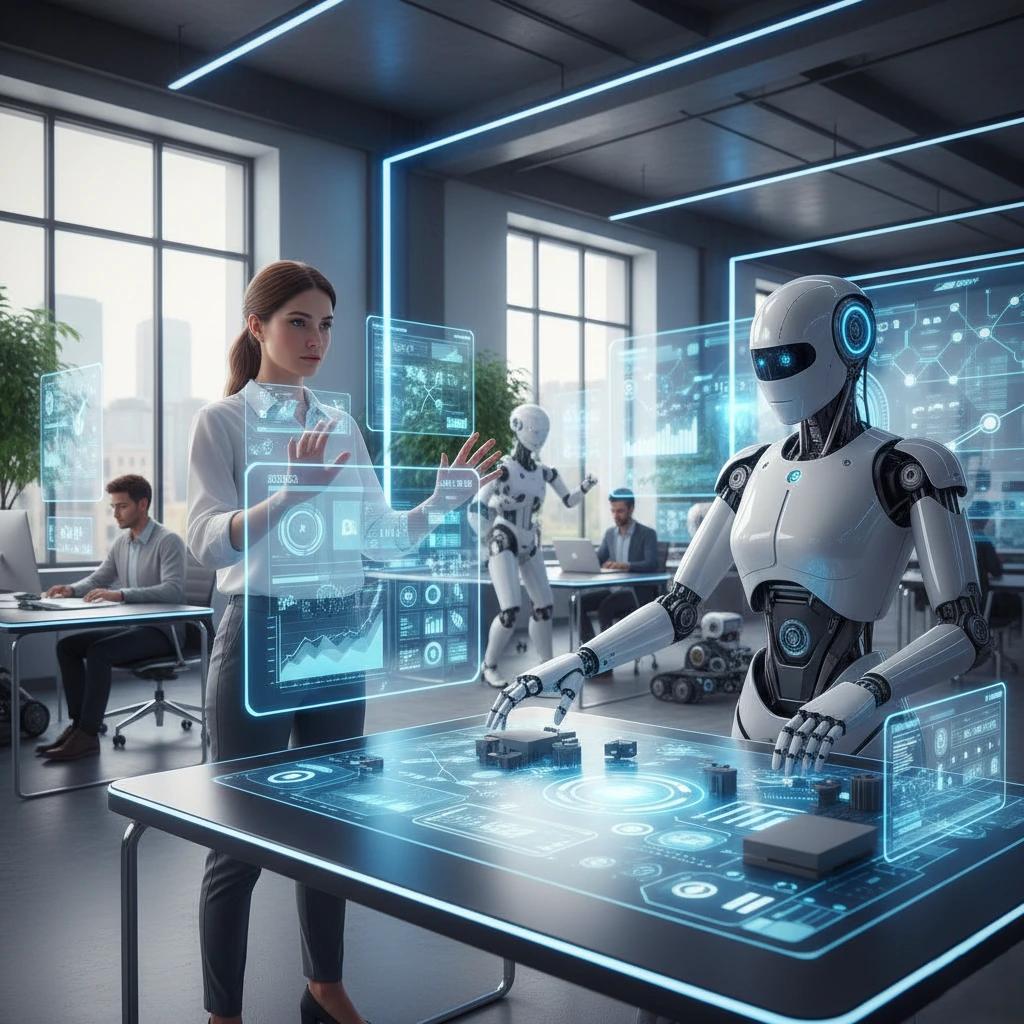
The landscape of work is evolving rapidly as technology continues to advance. In 2026, AI and automation are transforming industries, reshaping job roles, and creating both opportunities and challenges for workers worldwide. Staying informed about automation and workforce trends is essential for businesses and employees looking to adapt successfully.
As AI becomes more sophisticated, tasks that were once considered uniquely human are now being automated. From routine administrative work to complex decision-making processes, companies are leveraging AI to increase efficiency, reduce errors, and optimize operations. Understanding automation and workforce trends helps organizations prepare for these changes and ensures employees are equipped to thrive in the new economy.
The Rise of AI in Industry 2026
Industries across the board are embracing AI. Manufacturing is seeing a surge in robotics and predictive maintenance, while finance and healthcare leverage machine learning to analyze vast amounts of data. This widespread adoption of AI in industry 2026 is driving innovation, improving productivity, and reshaping the skills required for modern jobs.
For instance, warehouse automation systems reduce the need for repetitive manual labor, while AI-powered analytics platforms assist professionals in making data-driven decisions. Companies adopting these technologies often experience faster turnaround times and reduced operational costs, but they also face the challenge of retraining employees for new roles.
Shifts in Job Roles
With the adoption of automation, certain positions are becoming less central, while new roles are emerging. Routine tasks such as data entry, basic accounting, and inventory management are increasingly handled by machines. Meanwhile, demand is growing for roles in AI management, data analysis, cybersecurity, and human-centered design.
Monitoring automation and workforce trends allows both employers and employees to anticipate which roles may evolve and which new opportunities may arise. It also encourages strategic workforce planning, helping businesses retain top talent while transitioning employees into more meaningful and high-value positions.
Reskilling for the AI Era
One of the most critical strategies for employees navigating this transformation is reskilling for the AI era. Developing new skills in areas such as data analysis, programming, machine learning, and digital collaboration tools can make workers more adaptable and marketable.
Organizations are investing in training programs and online courses to equip their workforce with the skills needed to interact effectively with AI systems. Employees who embrace reskilling for the AI era can transition into emerging roles, ensuring they remain relevant in an evolving job market. Continuous learning and professional development are no longer optional—they are essential for career longevity.
Benefits and Challenges of Automation
Automation offers numerous advantages, including higher efficiency, reduced operational costs, and increased consistency in outputs. However, it also presents challenges. Workers may face job displacement or a shift in required skills, and businesses must balance technological investment with employee support.
Staying updated on automation and workforce trends enables companies to implement technology strategically while mitigating potential negative impacts on employees. Clear communication, training programs, and supportive transition plans are vital for ensuring both organizational success and employee well-being.
Preparing for the Future
To thrive in a landscape shaped by AI, employees and employers alike must be proactive. Businesses should integrate AI in industry 2026 thoughtfully, prioritizing both innovation and workforce stability. Employees should focus on acquiring transferable skills and embracing lifelong learning to adapt to changing job requirements.
Leveraging insights from automation and workforce trends allows companies to create forward-looking strategies that align technology adoption with human talent development. This approach not only boosts efficiency but also strengthens organizational resilience in an era of rapid technological change.