
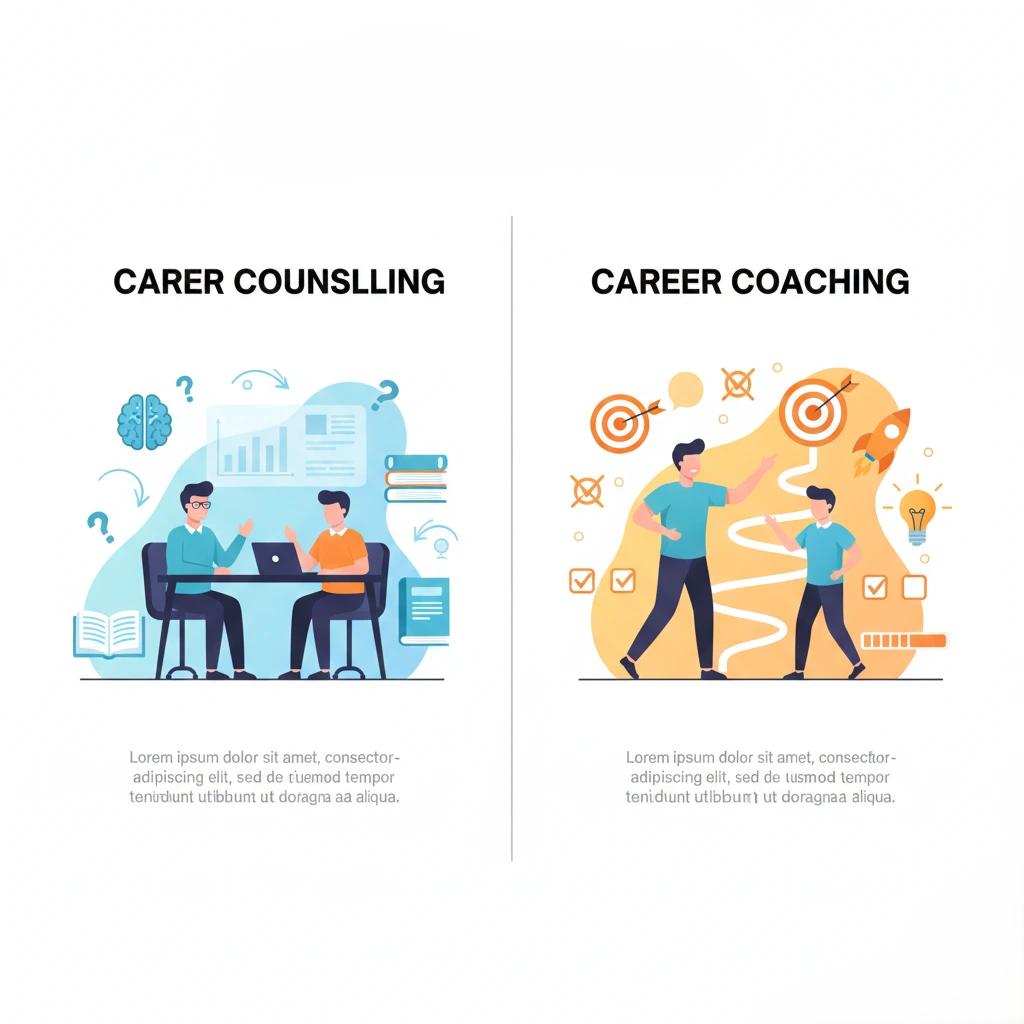
Choosing the right professional support can significantly impact your career journey. Many people often confuse Career Counselling vs Career Coaching, assuming they are the same. While both aim to help individuals grow professionally, their approach, purpose, and target audience differ. Understanding these differences helps students, graduates, and working professionals choose the right type of support for their needs.
Understanding Career Counselling
Career counselling primarily focuses on helping individuals make informed career decisions. It is commonly recommended for students, fresh graduates, or individuals who feel confused about choosing the right career path.
Career counsellors use structured assessments, aptitude tests, and personality evaluations to understand an individual’s strengths, interests, and values. Based on this analysis, they suggest suitable career paths and educational options. Many counsellors also provide Career Guidance Services that include detailed career reports, subject selection advice, and higher education planning.
When discussing Career Counselling vs Career Coaching, counselling is more diagnostic and assessment-driven. It aims to provide clarity and direction, especially when someone is unsure about their future.
Who Should Choose Career Counselling?
1. Students after 10th or 12th
2. College students unsure about specialization
3. Individuals planning a career switch
4. People confused about their strengths and interests
Career counselling answers the question: “Which career is right for me?”
Understanding Career Coaching
Career coaching, on the other hand, focuses on professional growth and performance improvement. It is action-oriented and future-focused. Instead of suggesting career options, a career coach works with individuals to set goals, improve skills, and overcome workplace challenges.
In the comparison of Career Counselling vs Career Coaching, coaching is less about testing and more about strategy. Coaches help clients develop leadership skills, improve communication, prepare for interviews, or plan promotions.
Unlike counselling, coaching assumes that the individual already has a career direction but needs support to grow within it.
Who Should Choose Career Coaching?
5. Working professionals aiming for promotion
6. Entrepreneurs seeking clarity in business direction
7. Individuals wanting to improve workplace performance
8. Professionals transitioning into leadership roles
Career coaching answers the question: “How can I grow and succeed in my chosen career?”
Key Differences Between Career Counselling and Career Coaching
To clearly understand Career Counselling vs Career Coaching, let’s break down the main differences:
1. Purpose
Career counselling helps in career selection and decision-making.
Career coaching focuses on career advancement and skill development.
2. Target Audience
Counselling is ideal for students and early-career individuals.
Coaching is more suitable for experienced professionals.
3. Tools and Techniques
Counsellors use psychometric tests, aptitude assessments, and structured Career Guidance Services.
Coaches use goal-setting frameworks, performance strategies, and accountability methods.
4. Approach
Counselling is analytical and assessment-based.
Coaching is motivational and action-driven.
Understanding Career Counselling vs Career Coaching allows individuals to select the right support based on their career stage.
When Do You Need Career Guidance Services?
Career Guidance Services are especially beneficial during critical decision-making stages, such as choosing a stream after 10th grade, selecting a major in college, or exploring postgraduate options. These services often fall under career counselling, as they provide clarity through data-driven insights.
However, professionals looking to refine their career strategy or build leadership skills may benefit more from coaching sessions.
In many cases, both services complement each other. For example, a student may begin with counselling to select the right career path and later seek coaching to grow within that field.
Can Someone Benefit from Both?
Yes, absolutely. The debate around Career Counselling vs Career Coaching should not be about which is better, but rather which is more suitable at a particular stage.
A student unsure about career options may start with counselling. Later, once employed, they may work with a coach to improve performance and achieve promotions. Both services contribute to long-term career success in different ways.
Choosing wisely ensures that time, money, and effort are invested in the right kind of professional support.