
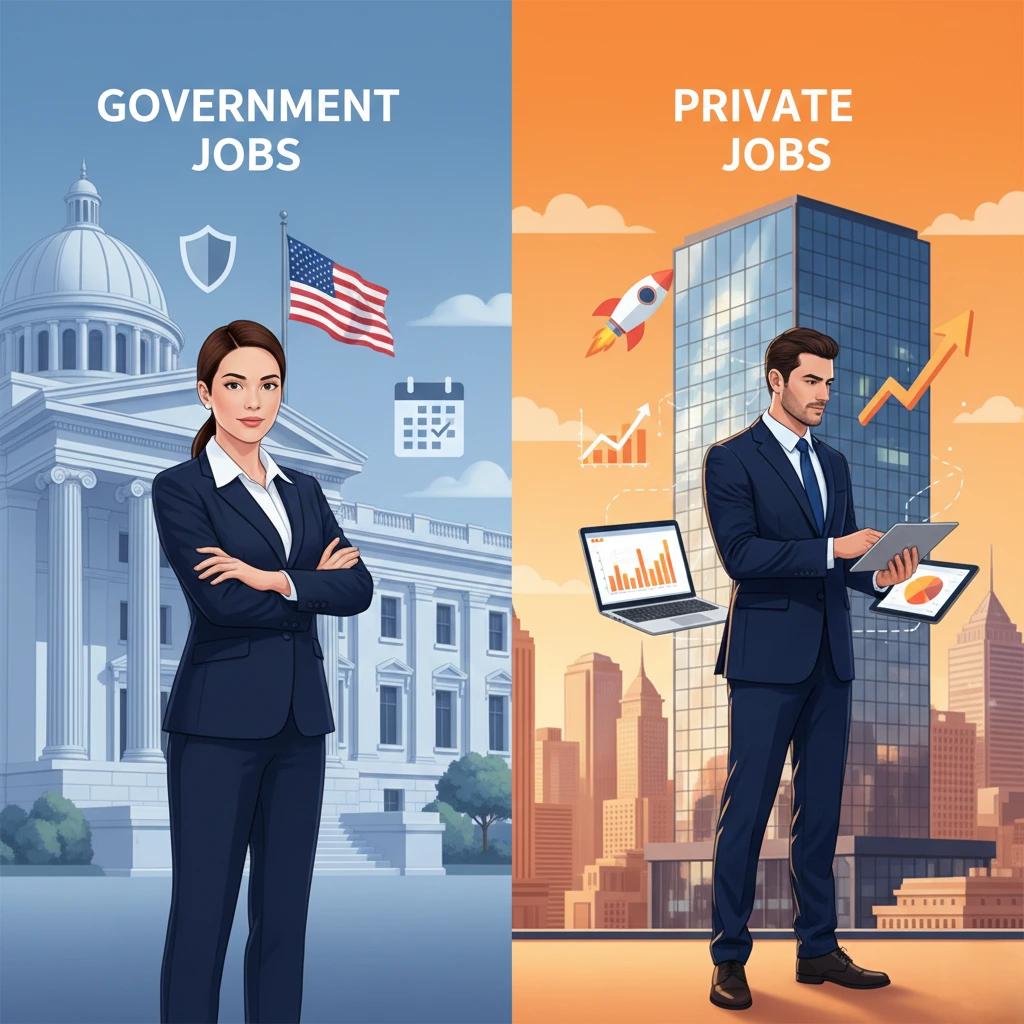
Choosing between a government job and a private job is one of the most important career decisions for students and working professionals. The debate around government vs private job continues because both options offer unique advantages and challenges. Your ideal choice depends on your goals, risk tolerance, lifestyle expectations, and long-term plans.
In this detailed job comparison, we will explore salary, career stability, growth opportunities, work-life balance, and overall career satisfaction to help you make an informed decision.
Understanding Government Jobs
Government jobs are offered by central, state, or local authorities. Popular examples include positions in organizations like banks, railways, public sector units, and administrative services.
Advantages of Government Jobs
One of the biggest reasons candidates prefer a government vs private job decision in favor of government roles is career stability. Government positions are generally permanent, with low risk of sudden termination. Employees receive structured promotions, fixed salary increments, pensions in some sectors, and other social security benefits.
Work-life balance is usually better in many public sector roles. Fixed working hours, national holidays, and paid leaves provide a predictable routine. This makes government jobs attractive for individuals who value long-term security and family time.
Another important factor in job comparison is job security during economic downturns. While private companies may downsize during recessions, government organizations tend to remain stable.
Disadvantages of Government Jobs
Despite strong career stability, growth opportunities can sometimes be slower. Promotions often depend on seniority rather than performance. Salary increments may also be fixed and less flexible compared to high-performing roles in private companies.
The recruitment process is highly competitive and time-consuming. Exams, interviews, and long waiting periods can delay career entry for aspirants choosing the government vs private job path.
Understanding Private Jobs
Private jobs are offered by privately owned companies ranging from startups to multinational corporations. These jobs span industries like IT, finance, healthcare, marketing, manufacturing, and more.
Advantages of Private Jobs
One major advantage in the government vs private job debate is faster career growth in the private sector. Promotions are often performance-based, allowing talented individuals to rise quickly. High performers can receive bonuses, incentives, and rapid salary hikes.
Private companies also offer diverse roles and dynamic work environments. Employees can switch organizations to negotiate better pay packages. This flexibility can significantly increase earning potential over time.
Innovation and skill development are usually faster in private organizations. Exposure to new technologies, global markets, and competitive environments enhances professional growth.
Disadvantages of Private Jobs
When considering career stability, private jobs may feel less secure. Layoffs, restructuring, and market fluctuations can impact employment. Performance pressure is typically higher, and long working hours are common in many industries.
Work-life balance may be challenging depending on the company culture. In this job comparison, private roles often demand higher productivity and adaptability.
Salary and Financial Growth
Salary is a crucial factor in the government vs private job decision. Government salaries are structured according to pay commissions, offering predictable increments and allowances. While starting salaries may be moderate, long-term benefits such as pensions, housing allowances, and medical coverage add value.
Private sector salaries vary widely. Entry-level packages can be higher than government roles in certain industries like IT or finance. However, income depends heavily on performance, skills, and market demand.
If your priority is steady income with long-term benefits, government roles may be suitable. If you aim for aggressive financial growth, private companies often provide better opportunities.
Work Environment and Lifestyle
Another important aspect of government vs private job selection is lifestyle preference. Government workplaces tend to follow traditional hierarchies and defined responsibilities. Stress levels may be lower in many departments.
Private organizations usually promote innovation, teamwork, and competitive performance. The environment can be fast-paced and demanding but also rewarding.
In terms of career stability, government jobs clearly provide more structured security. Private jobs, however, offer professional mobility and global exposure.